Equine tendons and ligaments
Suspensory degeneration
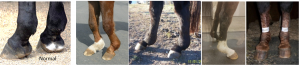
Suspensory degeneration is an inherited condition that causes weakening of the suspensory ligament. It has been reported in many breeds; it is most commonly associated with Peruvian Paso horses. Generally this is an aging change in predisposed horses but has been seen with steroid administration and hyperadrenocorticism, as well. Horses are typically very lame with abnormal hindlimb conformation (dropped fetlocks).
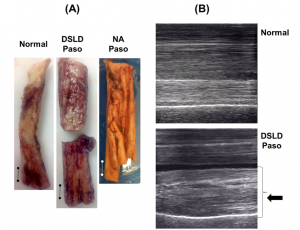
Degenerative suspensory ligament disease seems to be the result of excessive accumulation of proteoglycans that weaken the ligament. The disease is considered heritable and there is no known cure. The proteoglycan accumulation can affect tendons and other connective tissue structures, as well.
Degeneration of the suspensory ligament leads to dropped fetlocks and changes in the forces on other structures. The flexor tendons have to assume more concussive force and can become injured secondarily. The other joints become hyperextended as the fetlock drops. The abnormal conformation leads to osteoarthritis in multiple joints.
Ultrasound of the suspensory ligament is typically abnormal due to fiber tearing secondary to the increased stretch.
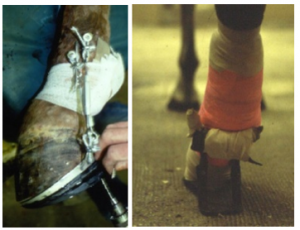
Treatment is supportive and primarily targeted to the other structures affected (NSAIDs and support shoeing). Some suggest that using polysulfated glycosaminoglycan (Adequan) for osteoarthritis is contraindicated because it may exacerbate the proteoglycan accumulation in the ligaments. Mild to moderate exercise every other day may be beneficial.
Key Takeaways
The suspensory ligament can just start to degenerate (no trauma required). This results in bilateral sinking of the fetlocks and a very painful horse. Prognosis is crappy. Don’t give steroids to these horses.
Degenerative suspensory ligament disease in horses. The Horse, 2018