Equine Oral, Esophageal and Rectal disorders
Oral masses
Neoplasia
Squamous cell carcinoma is the most common oral tumor. Local bone destruction is often advanced before obvious clinical signs develop. SCC is frequently associated with bone destruction and extension to lymph nodes. Excision and/or radiation therapy may be possible in some cases; however, most are too far advanced.
Dental tumors are usually benign and slow growing. Most respond to local excision.
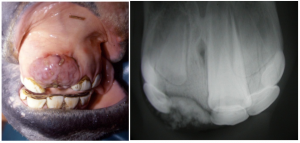
It is possible to remove the entire rostral lower jaw (from the incisors to the interdental space) for ossifying fibromas and other tumors. This is a referral procedure. Horses can eat normally but tend to have the tongue exposed.
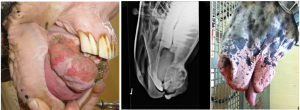
In general, bony tumors have a better prognosis than “soft” tumors of the oral cavity.
Resources
Oral and sinonasal tumors, Vet Clin Equine 40 (2024) 455–473
Equine mandibular growths, EVE (2015) 27 (1) 16-21